Gold, Frankincense and Myrrh: What the Magi's Three Gifts Actually Meant
Everyone knows the Magi brought three gifts. What gets less airtime is how carefully those gifts were chosen — not for their value, but for what each one said about the person receiving them.
The Gospel of Matthew names them: gold, frankincense, and myrrh. To a modern reader, that looks like a mixed bag. You've got precious metal, a tree resin that smells nice when you burn it, and another tree resin that smells kind of bitter and medicinal. But to a first-century audience in the eastern Mediterranean, those three items formed a clear symbolic code — one so obvious that Matthew didn't bother explaining it.
Gold: The Obvious One
Gold needs the least explanation. It's the gift you give a king. But it wasn't just about wealth — it was about political recognition. In the Roman imagination, the East was where gold came from. The land of Ophir, the mines of Nubia, the tribute routes from Arabia. By offering gold, the Magi weren't being generous. They were performing an act of allegiance. This is a king, they said. Treat him like one.
Frankincense: The Smoke That Connects Worlds
Frankincense is the one that trips people up. Why give a baby incense? The answer is that you weren't meant to burn it in the nursery. Frankincense was temple stuff. In every major religion around the eastern Mediterranean — Egyptian, Babylonian, Persian, Jewish, Greek — frankincense was the offering you made to a deity. Its white smoke rising from a censer meant prayer ascending to heaven.
The specific resin that would have travelled the Incense Roads from southern Arabia to the Levant was almost certainly Boswellia sacra — the same species we source from Omani and Yemeni suppliers today. In the first century, the trade routes were still running strong. The Nabataeans controlled the northern leg of the road, and Palmyra served as a key distribution hub. Frankincense was available in every market from Petra to Damascus, but it wasn't cheap. A gift of high-grade frankincense tears was a significant expense — roughly equivalent in value to the gold beside it.
By including it among the gifts, the Magi were saying something deliberate: this child is not just a king. He is divine. You give gold to a ruler. You give frankincense to a god.
Myrrh: The Dark Gift
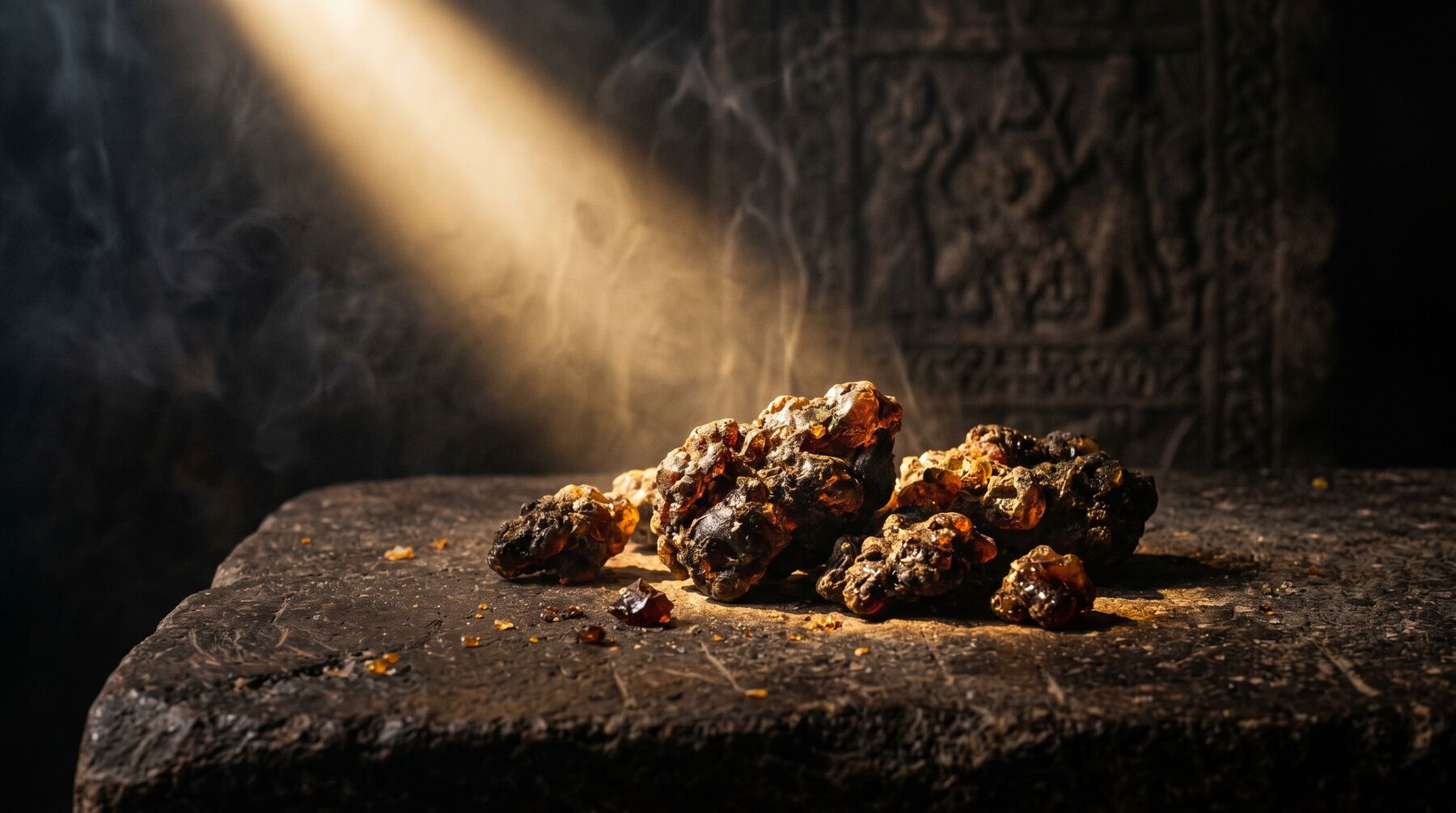
This is the one that's hardest to explain away. Myrrh. Bitter. Earthy. Heavy. The resin most associated across the ancient world with death.
Long before the Gospels were written, myrrh had established itself as the fragrance of transition. In Egypt, as we covered in Scent of Eternity, myrrh was the key aromatic used in mummification — packed into the body cavity to prepare the dead for the afterlife. The Ebers Papyrus lists it in dozens of funerary preparations. The Greeks burned it at funerals. The Romans used it in the same context.
Giving myrrh to an infant seems morbid until you understand the cultural shorthand. The Magi weren't predicting a sad ending. They were acknowledging that this child, like every human who has ever lived, would one day die. And the most honest gift you can give someone is one that acknowledges their full story. The symbolism is specific: in John's Gospel, Nicodemus brings a mixture of myrrh and aloes for Jesus's burial. The same substance that appeared at the beginning shows up at the end.
The Commiphora myrrha that produced that resin hasn't changed. It still grows on the same arid hillsides in Yemen and Somalia, harvested in the same two-month window, tapped with the same blade techniques that Nabataean traders watched being performed two millennia ago. Our Yemeni Myrrh is the same species, from the same region. The scent that filled Egyptian burial chambers can still fill your living room.
The Trade Network Behind the Gifts
What makes the Magi story land for me is how it accidentally documents the economic geography of the era. The Magi came from the East — likely Persia or Babylon. The gold could have come from several sources. But the frankincense and myrrh could only have come from one: the southern coast of Arabia, shipped north through the very Incense Roads whose ruins you can still visit today.
Strabo and Pliny both wrote about this trade. They described the route from the frankincense groves of Dhofar, through Shabwa and Petra, up to the Mediterranean ports. The Periplus of the Erythraean Sea gives sailing directions for the maritime leg. The point is: when the Magi arrived in Bethlehem carrying Arabian resin, they were participating in a supply chain that had been running for over a thousand years. They knew exactly what those resins meant because their entire culture had been saturated in that meaning for centuries.
What It Means to Burn Them Today
You can still recreate the aromatic dimension of the Magi's gifts with minimal effort. A small piece of Boswellia sacra on an electric warmer at 180°C gives you the bright, citrus-pine top notes that would have filled Persian and Jewish temples. A piece of Commiphora myrrha on the same warmer, set slightly higher at 200°C, releases the heavy, grounding bitterness that ancient embalmers knew so well. Burn them together and you get something neither achieves alone — an aroma that's both ascending and rooted.
If you want to go further, pair the resins with a reading of Matthew 2 or the hymn "We Three Kings." The sensory + textual combination is surprisingly powerful. It connects you to a tradition that has been performed continuously for two thousand years, using materials that have been traded for five thousand. You don't need to be religious to feel that weight. You just need to be present.
Browse our full collection of aromatic specimens — including both the frankincense and myrrh that make this tradition tangible. If you're new to burning resin, start with our practical guide to burning.