COMMIPHORA MYRRHA
The dark, earthy anchor from the highlands of Yemen. The essential counterpart to Frankincense.
Yemeni Myrrh
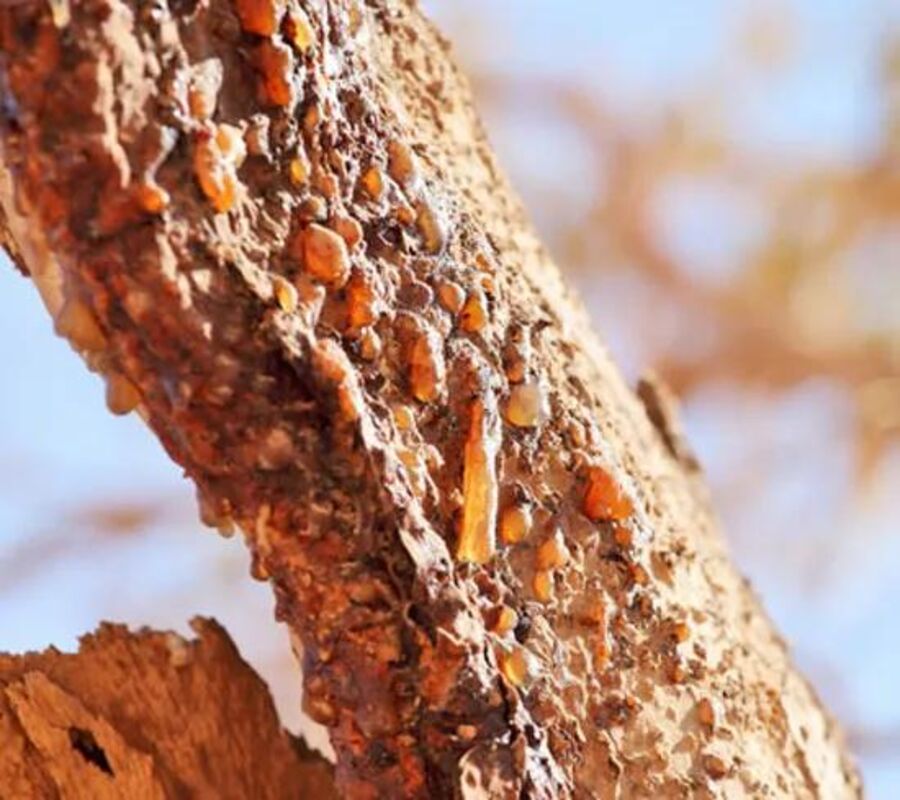
yrrh is extracted from the small, thorny Commiphora trees that grow in the harsh, arid highlands of Yemen. Unlike the bright, lifting notes of frankincense, myrrh is heavy and slow. It sits low.
It is an essential component in incense compounding. Myrrh burns much cooler and slower than frankincense. When blended, it prolongs the burn time of the incense and fills the room with a thick, meditative weight that lingers for hours. It smells of dark caramel, worn leather, and damp soil with a distinctly bitter, medicinal edge.
Ancient Egyptians used it in the embalming process for its antimicrobial properties. They understood it preserved and protected long before modern science could explain why.
ALCHEMY
AROMA
Photo · Bible.org
How to Burn Resin
Whether you want a thick, purifying smoke or a subtle, long-lasting scent, choose the method that suits your space.
Charcoal Method
Best for intense fragrance and thick, room-clearing smoke. Perfect for large spaces or spiritual cleansing.
- 01Get a natural charcoal disk glowing and wait for it to ash over.
- 02Place resin on top—or use a metal buffer for a cleaner scent.
- 03Adjust heat by adding ash or more foil layers.
Low-Heat Burner
Preserves the delicate top notes of Hojari without combustion. Ideal for daily use and smaller rooms.
- 01Place foil over a wax melt burner dish.
- 02Place resin tears directly onto the foil.
- 03A tea light underneath releases scent slowly for hours.
Modern Infusion
A completely smoke-free experience that provides an even, consistent fragrance throughout the day.
- 01Use an electric burner set to approx 180°C.
- 02Crush resin into dust for maximum surface area.
- 03Mix with unscented wax for a bespoke home fragrance.
Important Care & Safety
Aromatic Use Only
Our resins are supplied purely as incense and aromatic specimens. They are not intended for human consumption, ingestion, or as medical supplements.
Direct Flame
Never let resin touch a direct flame. It is a natural sap and is flammable—it can catch fire and be difficult to put out.
Fire Safety
Never leave burning charcoal or candles unattended. Keep burners on stable, heat-resistant surfaces away from pets and children.
Ventilation
Always burn resins in a well-ventilated area. If it gets too smoky, blow out the heat source and open a window.