Scent of Eternity: Myrrh in Ancient Egyptian Mummification
The Egyptians didn't see death as the end of the line. They saw it as a crossing — and myrrh was the toll you paid.
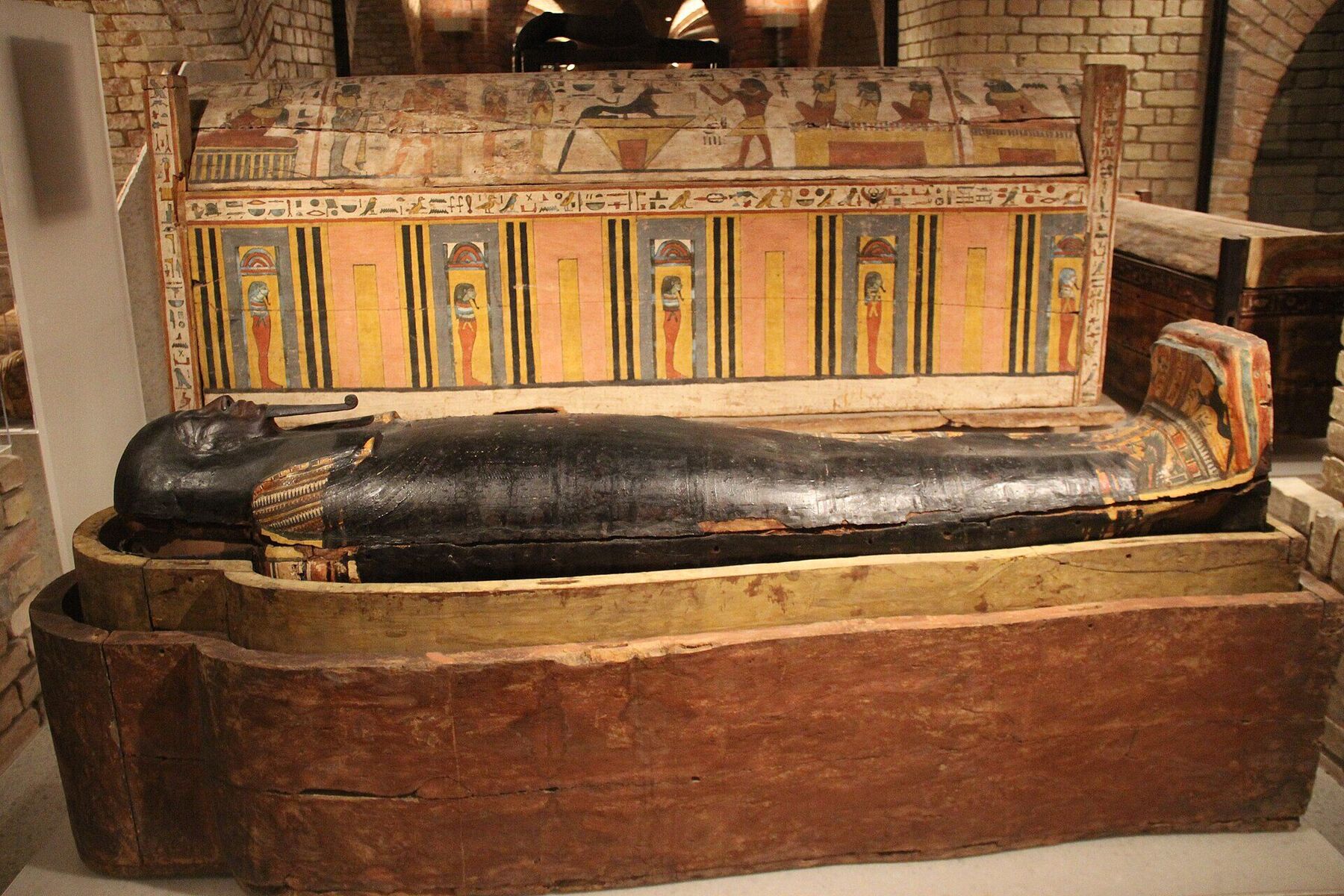
The body of a deceased Egyptian went through about seventy days of preparation. The priests removed the organs, packed the cavity with natron salt, and left the body to dry out. But just keeping the body from rotting wasn't the goal. The dead needed to smell good. Not just neutral, but deliberately, intensely fragrant. A body destined for the afterlife had to be fit for gods to inhabit, and gods didn't want to spend eternity in something that smelled wrong.
That's where the resins came in. Frankincense was the sun — bright, ascending, linked to Ra and the daily renewal of light. Myrrh was the opposite. Dark. Earthy. Bitter. It belonged to the underworld, to the spaces between things.
The Body as Incense
Herodotus, writing in the 5th century BCE, described Egyptian embalming in detail. He noted that the body cavity was packed with "myrrh, cassia, and every other perfume except frankincense." The exclusion matters. Frankincense was for the living, for temple ceremony, for the rising sun. Myrrh was for the transition itself.
The Ebers Papyrus, a medical and ritual document from around 1550 BCE, lists myrrh in dozens of preparations for the dead. Not as "medicine" in the modern sense — the Egyptians didn't split sacred and practical the way we do. Applying myrrh to a body was a chemical act with a spiritual meaning. They didn't distinguish between the two because they didn't see a gap.
Where It Came From: Punt and the Incense Roads
Myrrh didn't grow in Egypt. It came from the land of Punt — likely the coastal regions of modern Somalia and Yemen — carried north along the same Incense Roads that later supplied the temples of Rome. The most famous expedition was Hatshepsut's, around 1470 BCE, documented on the walls of her mortuary temple at Deir el-Bahri. The reliefs show ships returning with entire myrrh trees, roots wrapped in baskets, alive for the journey.
Hatshepsut claimed to have planted those trees in the courtyards of her temple. It's the first recorded attempt to transplant Commiphora outside its native range. It didn't work. The trees wouldn't grow outside the arid, rocky hills they evolved for. But the resin kept coming, year after year, across the same routes that moved gold, spices, and slaves.
The Scale of It
The numbers are hard to get your head around. Pliny the Elder wrote that the King of Arabia delivered an annual tribute to Rome of a thousand talents of frankincense and five hundred talents of myrrh. A talent was about 33 kilograms. That's over sixteen tons of myrrh per year, from one kingdom alone.
A single high-status Egyptian mummy could absorb kilograms of myrrh. Multiply that by thousands of burials across thousands of years, in dozens of necropolises, across multiple dynasties, and you start to understand why this stuff was worth its weight in gold. It wasn't rare because it was scarce. It was rare because demand was so staggering that supply could never quite catch up.
The Echo in Later Traditions
The connection between myrrh and death was so deeply planted in the ancient mind that it surfaced everywhere. When the Magi brought gifts to the infant Jesus, the three offerings mapped a cultural shorthand everyone in the room understood: gold for kingship, frankincense for divinity, and myrrh for death. Three thousand years of Egyptian practice had conditioned that symbolic vocabulary across the entire Mediterranean.
Myrrh meant transition. It meant the boundary between worlds. It meant preparation for something beyond.
What Remains
The same Commiphora myrrha that arrived in Hatshepsut's ships still grows on the same hills in Yemen and Somalia, harvested in the same seasons, tapped with the same blade techniques. The resin hasn't changed. The scent that filled the burial chambers of the Valley of the Kings is the same scent you get from a fresh tear today.
I think about this whenever I burn myrrh on an electric warmer at 180°C. The way it softens instead of melting. The way it darkens and releases its aroma in slow, patient layers. There's a heaviness to it that frankincense doesn't have. It pulls you down, into yourself, instead of lifting you up and out. That weight is the same weight the Egyptians felt. The same bitterness they chose for their most important ritual of all.
You can explore the same aromatic tradition through our Yemeni Myrrh, sourced from the same region the Egyptians called Punt. The tree is the same species. The harvesters use the same seasonal rhythm. The scent, still bitter, still grounding, still carrying something that feels older than words.