
The Art of Burning: A Practical Guide to Frankincense and Myrrh
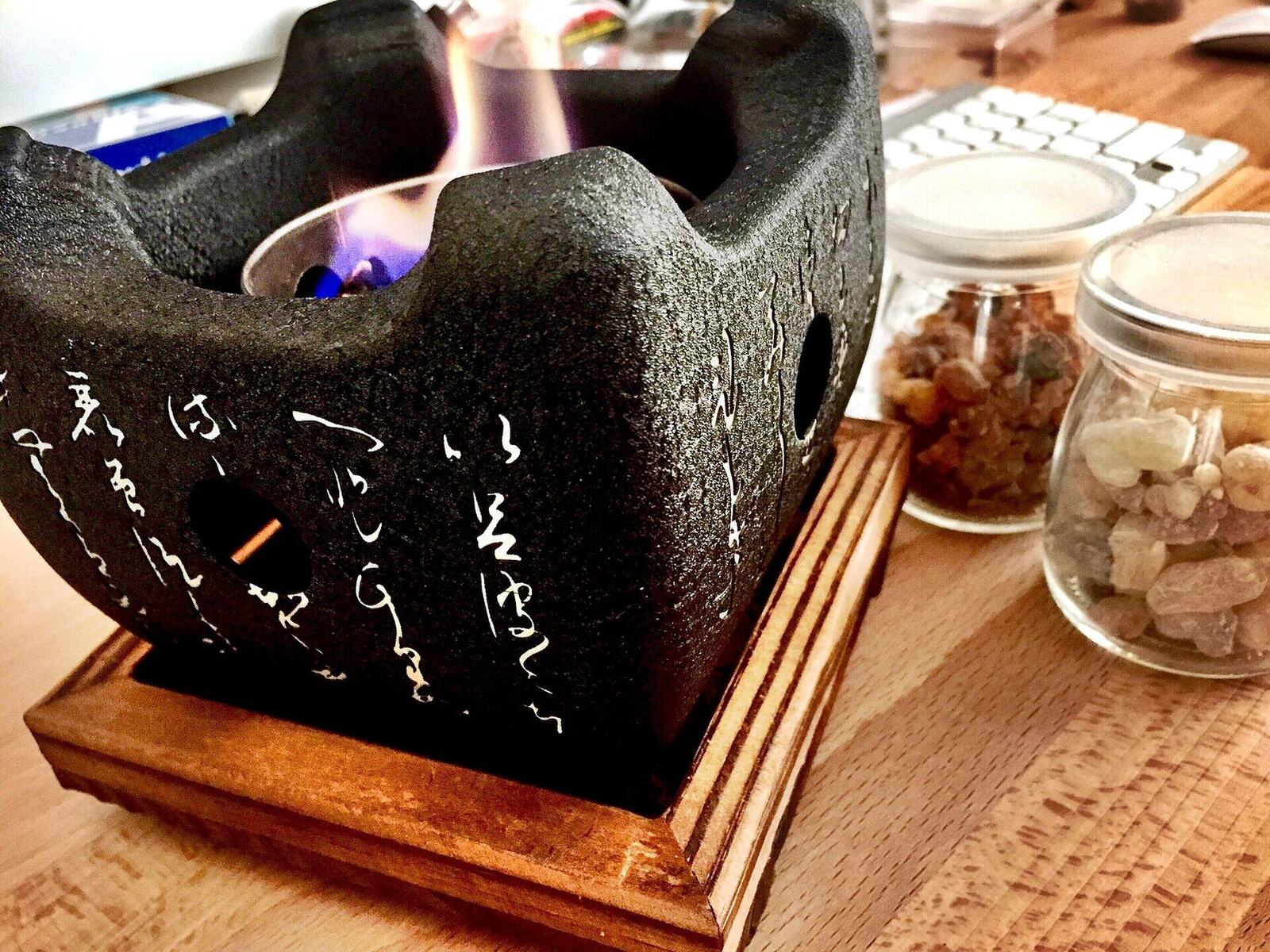
You've got the resin. You've got the curiosity. But you're staring at those amber tears wondering — now what?
What You Need
Three things.
- Resin — Not the powdered stuff that's been sitting in a clear plastic jar under shop lights for two years. Whole tears. Fresh. Slightly oily to the touch. If you're starting out, Royal Green Hojari is forgiving and spectacular. If you want something earthier, Yemeni Myrrh is your companion.
- A heat source — Charcoal discs (the self-igniting kind, usually called "quicklite") or an electric incense burner. More on this below, because it matters.
- A vessel — A heatproof dish with sand or ash at the bottom. The sand insulates and keeps the dish from cracking. Don't skip it unless you enjoy cleaning shattered ceramic off your floor.
The Charcoal Method
This is how it's been done for thousands of years, and it's still the most common approach. Light the disc at the edge with a match or lighter. It'll spark and fizz — that's the saltpetre. Wait. The disc needs to grey over completely before you add resin. This takes about two minutes, and it's the step most people skip because patience is in short supply.
Put a small piece of resin on the grey disc. One tear. Roughly the size of a lentil. Not a pile. The resin melts, bubbles, and releases smoke. When the smoke thins, add another piece. A single charcoal disc gives you 45-60 minutes of aromatic output.
The catch: charcoal burns hot. Frankincense on direct charcoal hits around 400°C, which vaporises the top-note compounds almost instantly. You get a dramatic opening, then the more subtle middle notes vanish before you notice them. For Royal Green Hojari, where the lime-zest and eucalyptus top notes are the whole point, charcoal can feel like watching fireworks through binoculars — impressive but blurry.
The Electric Burner
Electric incense burners (sometimes called resin warmers) let you control the temperature. Set it around 180-220°C and the resin melts slowly, releasing its compounds in layers. Top notes first, then the deeper balsamic heart, then the woody base.
This is where frankincense gets genuinely interesting. At lower temperatures, Boswellia sacra reveals a progression you can't perceive on charcoal. The same tear that gives you five minutes of drama on a disc will give you thirty minutes of evolving scent on an electric burner.
Myrrh benefits even more. The sesquiterpenes in Commiphora myrrha need time and moderate heat to unfurl. Blast it on charcoal and you get a sharp, acrid smoke. Warm it gently and you get the deep, resinous warmth that made it worth its weight in gold along the Incense Road.
Blending: Frankincense and Myrrh Together
You can burn them on the same disc or burner. The traditional ratio is roughly three parts frankincense to one part myrrh. Frankincense lifts. Myrrh grounds. Together they create something neither manages alone — smoke that's bright and deep at the same time.
Start with that ratio and adjust by instinct. There's no wrong answer, only what your nose tells you.
Things That Help
- Don't overload. Less resin, more often, beats a pile that smokes itself out in three minutes.
- Ventilation. Burn in a space with slight airflow. You want the smoke to move, not pool on the ceiling.
- Tongs. Charcoal discs get dangerously hot. Use tongs. Every time.
- Storage. Keep resin in a sealed glass jar away from sunlight. It lasts indefinitely if kept dry, but the essential oil content degrades with heat and light exposure.
Why It Matters
The Incense Road stretched over 2,000 kilometres of desert. Caravans carried these resins from Dhofar to Jerusalem, Alexandria, and Rome. The people at the end of that road didn't just throw resin on a fire and hope for the best. They used specific burners, specific temperatures, specific sequences. The Egyptian priests had a daily schedule — frankincense at dawn, myrrh at noon, Kyphi at dusk — each matched to the heat and the moment.
You don't need a temple. But a bit of care goes a long way. The resin deserves that much.
Browse our full collection of aromatic specimens in The Reserve.