The Omani Frankincense Renaissance: Inside the Rebirth of the World's Oldest Luxury Ingredient
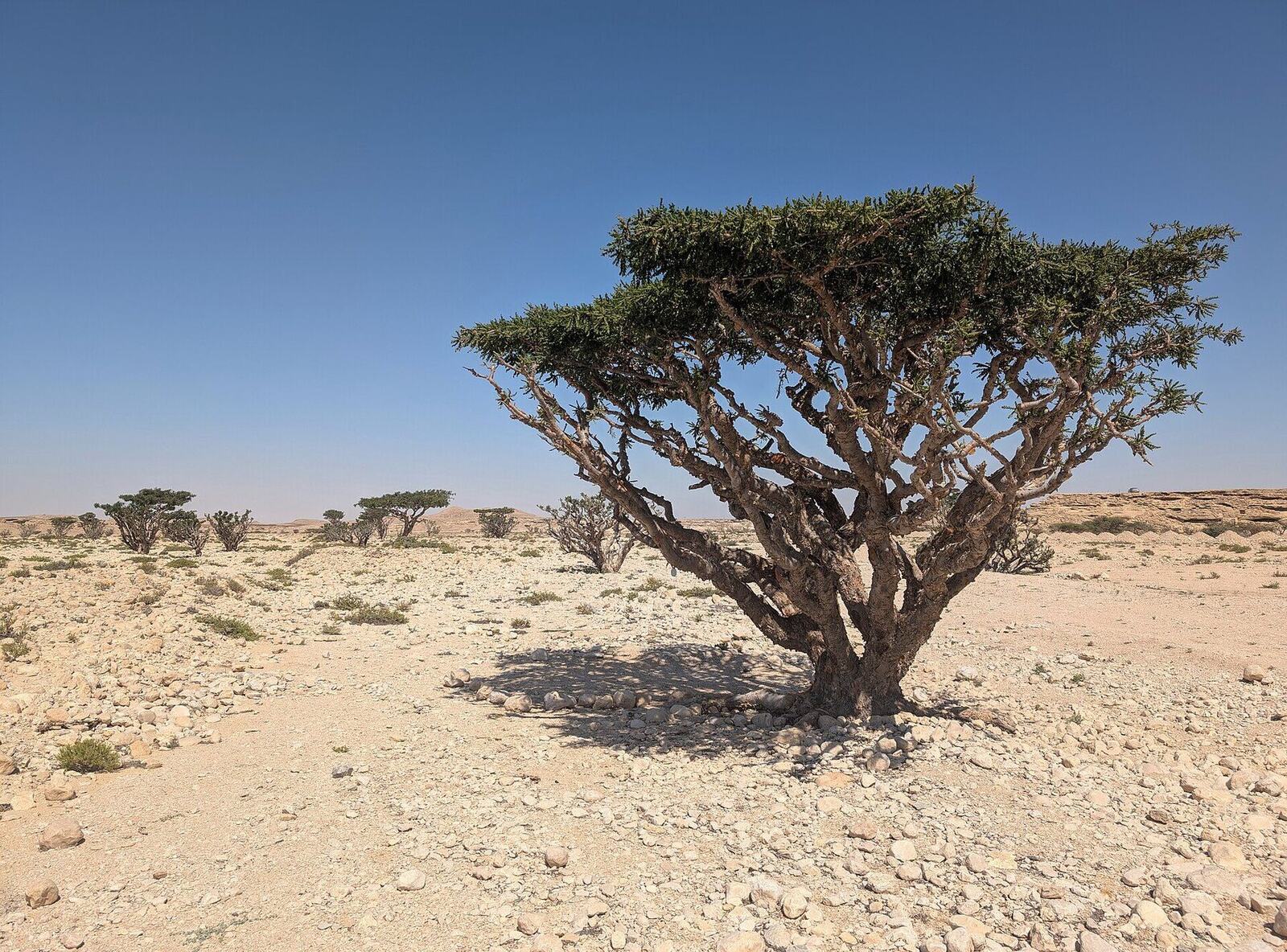
Something unusual is happening in a dry valley in southern Oman. After two decades of sitting largely symbolic, a UNESCO World Heritage site has become the most ambitious frankincense project in a generation.
Wadi Dawkah sits in the Dhofar region, about 45 minutes north-east of Salalah. It's a dry, rocky valley where roughly 4,000 Boswellia sacra trees grow on 1,500 hectares of protected land. UNESCO recognised it in 2000 as part of the "Land of Frankincense" World Heritage listing, alongside the ancient port of Khor Rori and the frankincense groves of Wadi Dawkah itself. But for over twenty years, the designation was mostly that — recognition. The resin wasn't being actively managed or harvested for commercial use.
The 2022 Turning Point
In 2022, the Omani Ministry of Heritage and Tourism did something unexpected. They partnered with Amouage — the Omani high perfumery house — to take over stewardship of the site. The goal was ambitious: transform Wadi Dawkah into a fully traceable, sustainably managed frankincense source that could serve as a global model.
This wasn't a branding exercise. Amouage brought in DSM-Firmenich for fragrance expertise. They established a Scientific Advisory Council. They hired a full-time team of Omani harvesters trained in traditional tapping techniques. Every tree in the reserve was geolocated, photographed, measured, and assigned a QR code. Every harvest event is recorded. Each tree has a digital identity.
The first trial harvest for perfumery began in September 2023. By 2025, Wadi Dawkah had earned FairWild certification — the first site on the Arabian Peninsula to receive it. The certification verifies that harvesting practices meet international standards for sustainability, ethics, and transparency. Matthew Wright, Head of Wadi Dawkah for Amouage, described it as proof that "international standards of ingredient sourcing can — and are — being upheld in the Sultanate of Oman."
GI Status: A Legal Landmark
Then, in April 2026, Oman secured Geographical Indication (GI) status for its frankincense through the World Intellectual Property Organization (WIPO) — the first GI registration from the Gulf region. The GI links Omani frankincense to its specific geographic origin and cultural heritage, providing legal protection against imitation under the Geneva Act of the Lisbon Agreement. It's the same class of protection that Champagne and Parmigiano-Reggiano enjoy.
The practical effect matters more than the prestige. GI status means consumers can verify that what they're buying is actually Omani Boswellia sacra, not a cheaper substitute from another country or species. For anyone who's ever wondered whether the "frankincense" in a clear plastic jar at the shop is really what it claims to be, this is a genuine improvement.
Why This Matters for Your Burner
You might not care about WIPO registrations or FairWild certification. What you care about is whether the resin you're burning is any good. The connection is more direct than it sounds.
A tree that's been properly rested, tapped at the right season, and given time to recover produces resin with higher volatile oil content. That translates to more aromatic complexity on the burner — the layered unfolding of top, middle, and base notes that makes high-grade Royal Green Hojari worth seeking out. Oversimplified: sustainable harvesting isn't just ethical, it produces better incense.
This is the opposite of the commodity frankincense problem outlined in our piece on frankincense sustainability, where rising demand pushes harvesters toward practices that damage trees and degrade resin quality. Wadi Dawkah flips that model: rather than maximising volume, it optimises for quality, traceability, and long-term tree health.
What the Resin Actually Tastes Like — Or, Smells Like
The trees at Wadi Dawkah are Boswellia sacra, the same species that built the Incense Roads. Omani sacra is distinguishable by its high alpha-pinene content — often over 70%. That's the compound responsible for the piercing, pine-and-lime top note that defines the best Hojari grades. The resin from Wadi Dawkah is being characterised for its precise olfactive profile, with regional variation within the site itself being studied.
Amouage's stated goal is for Wadi Dawkah to become a reference site for ethical ingredient sourcing — a model that could be replicated across the region. The initiative sits within Oman's broader 2040 economic diversification plan. Frankincense, exported as a raw commodity for millennia, is being repositioned as a controlled, high-value ingredient with protected designation and auditable supply chains.
The same trees. The same limestone slopes. The same monsoon that has driven resin production for thousands of years. What's changed is the infrastructure around it.
For the Curious
Most of the resin from Wadi Dawkah is currently directed toward perfumery — essential oil for the fragrance industry. The unprocessed tears aren't widely available through retail channels. But the principles that govern Wadi Dawkah — sustainable harvesting, species verification, regional traceability — are the same ones we apply when sourcing our own aromatic specimens from Omani and Yemeni suppliers.
If you want to taste the difference traceability makes, start with a small batch of Royal Green Hojari and burn it low on an electric warmer. Pay attention to how the scent unfolds over thirty minutes instead of thirty seconds. That layered progression — the lime, the pine, the cooling eucalyptus middle, the soft balsamic finish — is exactly what sustainable harvesting preserves, and what the commodity market destroys.