The Last Trees: Why Frankincense Sustainability Matters More Than Ever
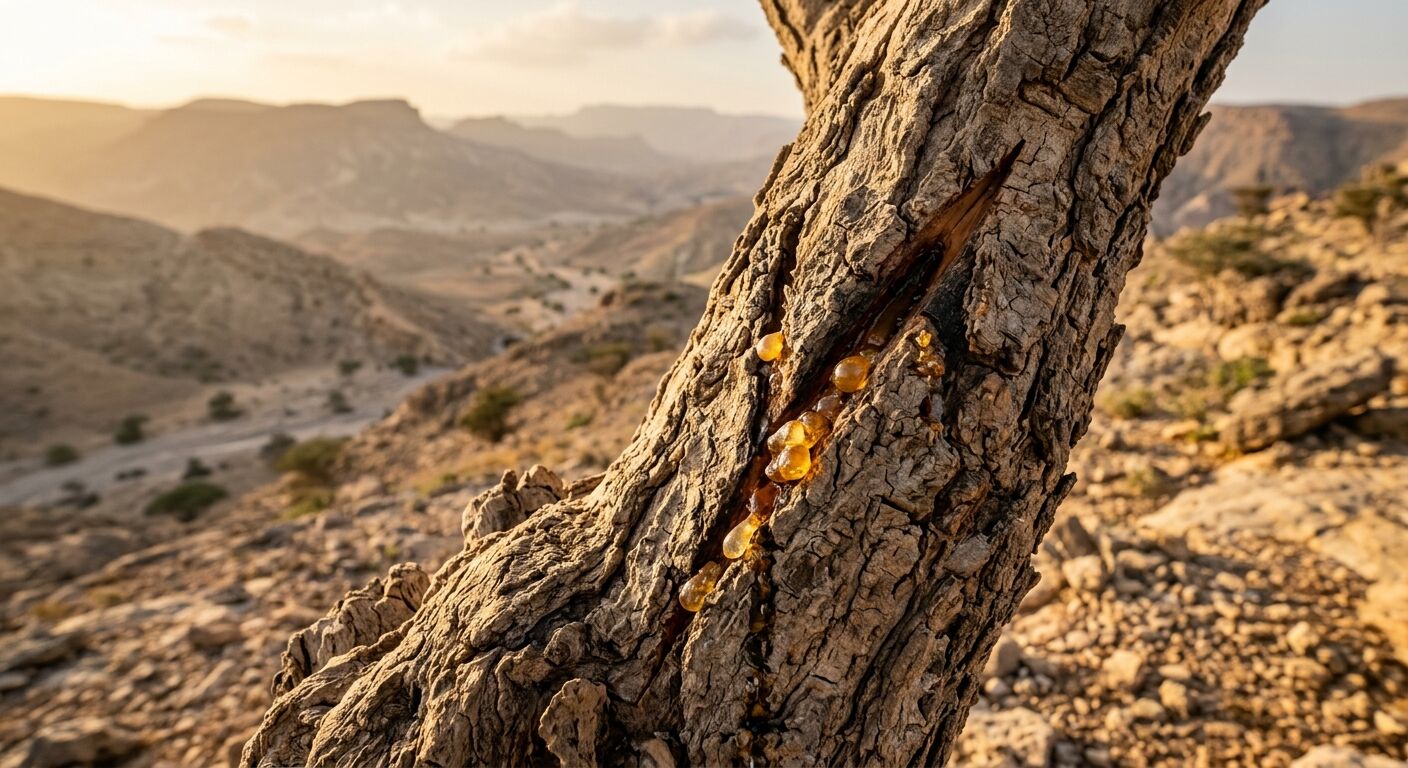
There's a quiet crisis happening in the Dhofar mountains of Oman, and it smells incredible. The Boswellia sacra tree — source of the world's most prized frankincense resin — is disappearing. Not in centuries. Not in decades. Right now.
A Tree Under Siege
A 2025 conservation assessment published in Journal of Arid Environments painted a stark picture of Boswellia sacra populations across Oman. Researchers identified a cascade of threats: overgrazing by livestock, aggressive resin tapping, mining encroachment, pest infestations, and increasingly erratic weather. The populations most prized for their aromatic output — those producing the translucent, emerald-tinted Royal Green Hojari — were among the most pressured.
The core problem isn't that people harvest resin. These trees have been tapped for thousands of years. The problem is how. Unskilled tapping — making too many cuts, cutting too deep, harvesting at the wrong time of year — drains the tree faster than it can recover. A 2021 study found that trees with more than twelve wounds per season suffered up to 90% beetle damage. The trees don't just lose their resin. They die.
The Market Squeeze
Demand for frankincense is surging. The global frankincense oil market is projected to hit $17 billion by 2033, growing at roughly 15% annually. That demand puts real pressure on supply chains that are, at their root, a small number of families in remote mountain regions climbing rocky hillsides to score bark with machetes.
When international buyers push for lower prices, harvesters push trees harder. It's a vicious cycle: more demand, worse practices, fewer trees, lower quality resin, more demand for what's left. The BBC called it plainly in late 2025 — the world is running out of frankincense.
What Sustainable Harvesting Actually Looks Like
Traditional tapping methods, passed down through generations in Oman's Dhofar region, are remarkably gentle when followed correctly. Experienced harvesters make shallow, precise incisions during specific seasons, allowing the tree to seal and rest between cycles. They limit the number of wounds per tree and rotate tapping across different trunks. The result is less resin per tree per season — but the tree lives for centuries instead of dying in a decade.
This is the approach we insist on. Every batch of frankincense in our collection is sourced from suppliers who work closely with harvesters following traditional tapping cycles, and every batch traces back to a specific grove. We don't deal in anonymous bulk supply chains.
Why It Matters for Your Practice
If you burn frankincense — whether for ritual, for meditation, or simply because you appreciate the complexity of its aromatic profile — the quality of what you're burning is directly tied to the health of the tree it came from. A tree that's been aggressively over-tapped produces a thinner, less complex resin. The deep, layered character of high-grade Boswellia sacra comes from a tree that's had time to recover, to synthesize, to rest.
Sustainability isn't just an ethical stance. It's a quality standard. The finest aromatic specimens in the world have always come from the best-cared-for trees. That was true two thousand years ago when the Incense Road connected Dhofar to Rome. It's true now.
"Consumers of frankincense resins and oils must educate themselves and, with that awareness, demand traceability both socially and environmentally from the companies they buy from."
— Research Outreach, 2023
What You Can Do
Ask where your resin comes from. Not the brand — the grove. If a seller can't tell you which region, which species, or which harvesting practices were used, that's a red flag. Choose suppliers who work with traditional harvesters and can demonstrate traceability. Pay a fair price. The real cost of frankincense — when the trees are respected, the harvesters are paid properly, and the groves are monitored — is higher than the commodity market suggests. That premium is the difference between a living tradition and a dead forest.
You can explore our current, fully traceable collection of Omani and Yemeni aromatic specimens in The Reserve. And if you're curious about the botany of the tree itself — why Dhofar's microclimate produces such extraordinary resin — our guide to Royal Green Hojari goes deep on the geography.