The Bitter Harvest: Where Myrrh Comes From and Why Yemeni Tears Are Different
If you've only ever smelled myrrh from a dusty bag at a market stall, you haven't actually smelled myrrh. The real stuff hits different.
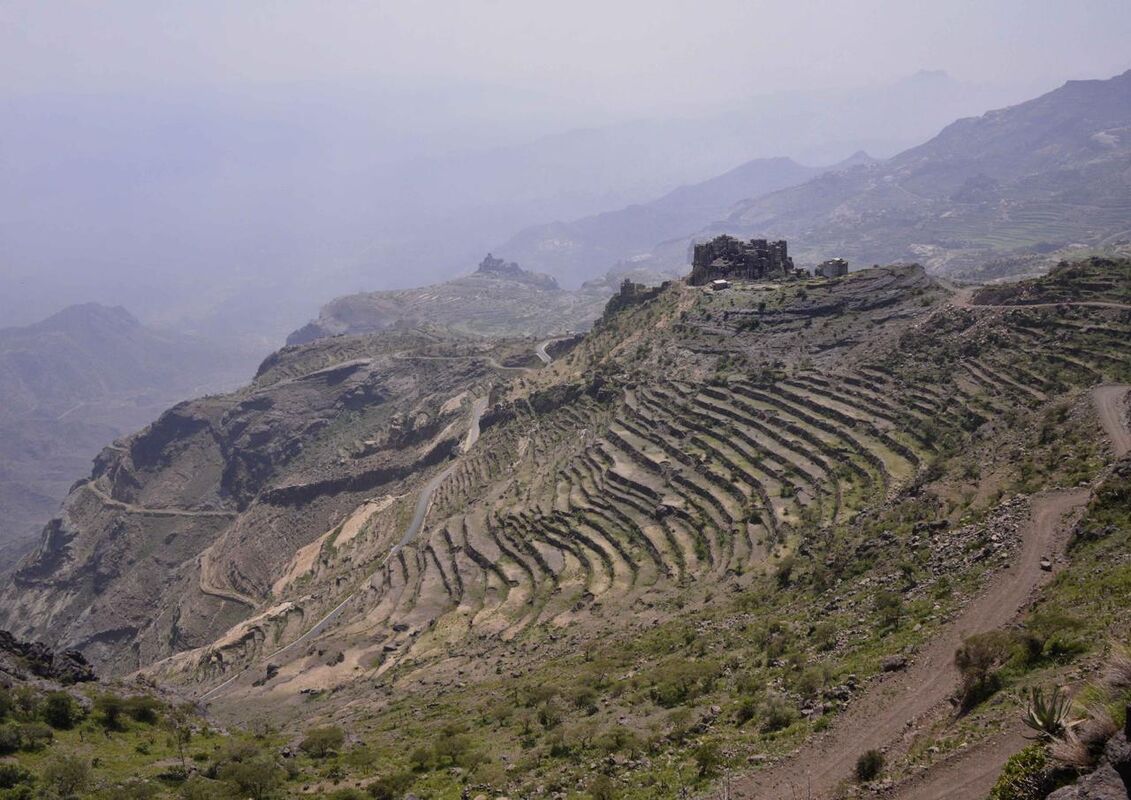
Myrrh comes from trees of the genus Commiphora \u2014 thorny, scrubby things that look more like overgrown bushes than proper trees. They grow in places that seem deliberately inhospitable: limestone and gypsum slopes, dry riverbeds, the kind of rocky ground where nothing else wants to put down roots. The most important species for incense, Commiphora myrrha, is native to a specific band of arid terrain running from the mountains of southern Yemen across the border into Somalia and down through the Somali region of Ethiopia.
The tree's response to that harsh environment is what makes it interesting. When the bark is cut, the tree exudes a resin that hardens into the tears you see in an aromatic specimen collection. But the character of that resin \u2014 its colour, its oil content, its scent profile \u2014 varies dramatically depending on exactly where the tree is growing, how old it is, and when it was tapped.
The Yemen Difference
Yemeni myrrh occupies a category of its own. The resin from trees in the Al-Mahrah region and the Hadhramaut valleys has a reputation that goes back millennia \u2014 it was the myrrh the Egyptians demanded for their most important rituals. The distinction is partly genetic: the Commiphora myrrha trees that grow on the Yemeni highlands express a different chemical balance than their cousins across the Gulf of Aden. Higher oil content. More complex sesquiterpene structure. A deeper, more layered aromatic profile.
You can see the difference without burning a single tear. High-grade Yemeni myrrh is oily to the touch, almost greasy. It bends before it breaks. The colour ranges from amber to deep reddish-brown, and the surface has a slight sheen. Lower-grade material from other regions tends to be drier, more brittle, and lighter in colour. The same grading principles that apply to Royal Green Hojari frankincense apply here: oil content is everything.
How It's Harvested
The harvesting process for myrrh is rougher than frankincense. Frankincense harvesting is careful \u2014 a single diagonal incision, a waiting period, a gentle collection. Myrrh harvesters take a different approach. They make multiple cuts in the bark, or remove strips of bark entirely, to encourage the tree to bleed more resin. The gum exudes as a pale, milky liquid that hardens into irregular, lumpy tears over two to four weeks.
The harvesters return to the same tree two or three times per season. Each cut produces less resin than the one before, but the later harvests are often the ones with the richest aromatic profile. The first weeping is thin and watery. The later flows are thicker, darker, and more concentrated. The best Yemeni tears come from the second and third cuts of the main harvest season, which runs from late summer through autumn.
Fresh vs. Stale: The Same Problem as Frankincense
Myrrh suffers from the same fate as frankincense in the global commodity market. Most of what reaches buyers outside the Horn of Africa has been sitting in warehouses for months or years. The volatile compounds that give myrrh its depth \u2014 the furanosesquiterpenes that produce that distinctive bitter, earthy scent \u2014 degrade with time and exposure. By the time the resin reaches a shop shelf, it's often a fraction of what it was when it left the tree.
Fresh Yemeni myrrh is a different material entirely. On a low-temperature electric burner at around 180\u00b0C, it softens slowly and releases its scent in layers. The opening is sharp and bitter \u2014 almost medicinal, but in a clean, herbal way \u2014 before softening into something warmer, woodier, with a hint of vanilla-like sweetness. The Egyptians understood this: they used myrrh not for its bitterness but for the complexity beneath it.
Stale myrrh doesn't do any of that. It smokes, smells flat and astringent, and fades quickly. If you think you don't like myrrh, there's a good chance you've only ever smelled the stale version.
The Somali Connection
Somalia is the world's largest producer of myrrh, accounting for the majority of the global supply. But volume doesn't equal quality. Somali myrrh tends to be lighter in colour, drier, and less oily than Yemeni material. The trade name for Somali myrrh is often just \"garden grade\" \u2014 the commodity stuff that goes into bulk incense blends. It burns hot, smells sharp, and lacks the depth of the Yemeni harvest.
That's not a knock on Somali myrrh across the board. The best Somali grades \u2014 hand-sorted, transparent tears with high oil content \u2014 can rival good Yemeni material. But the market doesn't reward quality in Somali myrrh the way it does for Omani frankincense. Most of it gets mixed, compressed, and sold by weight. The structure that exists for Omani resin \u2014 grades like Hojari, Najdi, and Sha'bi, each with specific characteristics \u2014 simply doesn't exist for myrrh in the same way.
What to Look For
When you're choosing myrrh for ritual burning or sensory exploration, three things matter more than anything else:
- Oil content. The resin should feel slightly tacky when you press it between your fingers. Dry, crumbly tears are old or low-grade.
- Colour. Deep amber to reddish-brown, with some translucency. Pale or opaque material is usually less aromatic.
- Origin. Yemeni myrrh from the Al-Mahrah or Hadhramaut regions carries the most complex profile. Ask where it came from. If the seller can't tell you, assume it's commodity-grade Somali stock.
We source our Yemeni Myrrh from a small network of suppliers in the Al-Mahrah region. It's hand-sorted, fresh from the current season, and stored in sealed glass away from light. The difference between this and the stuff you find in most shops isn't subtle. If you've ever wondered why myrrh was worth its weight in gold along the Incense Roads, one burn of the fresh material will explain it.