The Cut That Heals: How Frankincense is Harvested, Graded, and Sorted
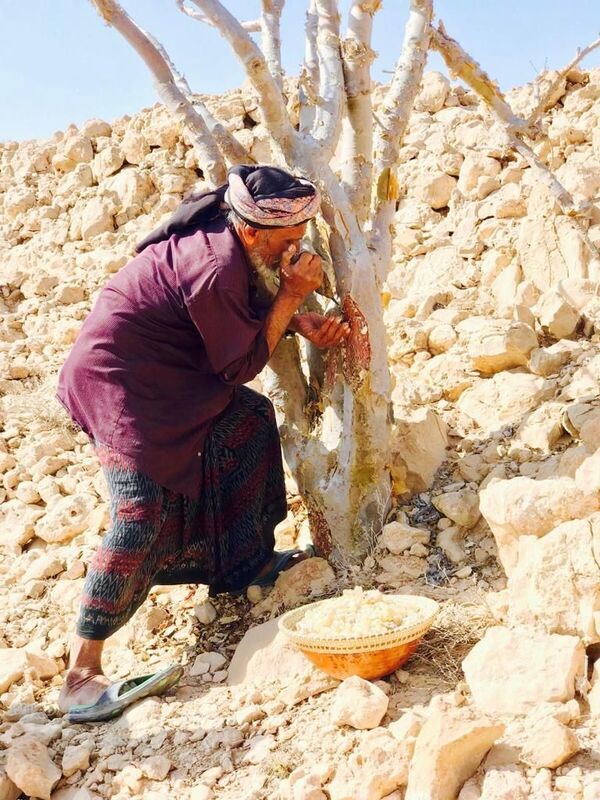
Frankincense doesn't just fall off the tree. Someone has to cut it open first.
The resin you put on your burner started as a wound. A deliberate one. Somewhere on a limestone slope in Dhofar, a harvester made a shallow diagonal cut in the bark of a Boswellia sacra tree with a curved blade called a mingaf. What came out was milky white sap. What hardened into the tear you bought is the tree's response to that injury — a protective seal, rich with volatile oils, designed to keep infection out while the bark heals.
This is the part of the frankincense story that doesn't get much airtime. Everyone knows the Incense Road existed. Fewer people know what happens between the tree and the market — and the difference between a resin that burns clean and one that smokes bitter is almost entirely determined in this window.
When the Knife Goes In
Boswellia sacra, the species that built the Incense Roads, only produces resin during two harvest windows per year: late spring (around March to May) and early autumn (September to October). The timing is tied to the monsoon cycle. The summer khareef brings rain to Dhofar, and the trees flush with new growth. The resin that exudes after the monsoon is softer, lighter in colour, and generally considered higher in aromatic oil content.
Each tree gets tapped two to three times per harvest. The harvester makes a fresh cut on a different side of the trunk each time — never in the same spot twice. This isn't kindness; it's pragmatism. Cutting the same place again would damage the cambium layer and kill the tree. A healthy Boswellia sacra can produce resin for forty to fifty years if harvested correctly. A poorly managed one can die within a decade.
The Waiting Game
After the cut, the sap seeps out slowly. It takes about ten to fourteen days for enough resin to accumulate and harden into collectable tears. The first exudation is sometimes scraped off and discarded — it's thin, watery, and lacks the resinous concentration of later flows. The good material comes from the second and third weepings, which are thicker and richer in terpenes.
Harvesters collect the tears by hand. They don't shake the branches or force the resin off. Each tear is picked individually and placed in a basket. The resin is then sorted in the shade — direct sunlight degrades the volatile oils almost immediately, which is one reason commodity-grade frankincense often smells flat. It wasn't protected from the sun after harvest.
Grade is Everything
The grading system for Omani frankincense is straightforward once you know what to look for, and opaque until you do. The highest grade is Royal Green Hojari — tears that are pale green to golden, roughly lentil-sized or larger, with a slightly oily surface sheen. When you crush one between your fingers, it should feel slightly tacky, not brittle. The aroma should hit you immediately: pine, lime, eucalyptus, something almost minty. That's the high alpha-pinene content.
Below Royal Green Hojari, you get Silver Hojari (lighter in colour, slightly lower oil content), then First Grade (mixed tears, some dust, less aromatic complexity), and finally commodity-grade — the dark, dusty stuff that arrives in bulk sacks and is sold by weight rather than quality. We covered the specific characteristics of the top tier in our Royal Green Hojari guide, but the key distinction that separates grade from grade is simply this: oil content. More oil means more scent, a longer burn, and a more complex aromatic profile.
The sorting is done entirely by eye and hand. There's no machine that can tell the difference between a Grade 1 tear and a Royal Green tear. The same fingers that picked the resin off the tree decide which basket it goes into. It's a skill that takes years to develop, and it's one reason premium Omani frankincense remains expensive — not because the raw material is scarce, but because the labour required to sort it properly is substantial.
Why Freshness Matters More Than You Think
Frankincense doesn't expire in the way food does. But its aromatic quality degrades measurably over time. A resin that was harvested eighteen months ago and stored in a sealed glass jar in a cool, dark place will still perform well. The same resin left in a plastic bag on a market shelf under fluorescent lights for six months will have lost most of its top notes. The volatile compounds that make Boswellia sacra interesting — the alpha-pinene, the limonene, the alpha-thujene — evaporate at room temperature. Slowly, but they go.
This is the quiet tragedy of the commodity frankincense market. The resin itself can sit in warehouses for years. By the time it reaches the end buyer, what remains is a shadow of the original profile — woody, flat, vaguely smoky. That's not what frankincense is supposed to smell like. Fresh Royal Green Hojari, harvested within the last season and stored properly, is a completely different material. The difference between fresh and stale resin is the difference between a lime squeezed in front of you and a lime that was squeezed last Tuesday.
This is also why the sustainability question matters beyond ethics. As covered in our piece on frankincense sustainability, over-harvesting damages trees and produces lower-grade resin — but it also floods the market with old stock, depressing prices and making it harder for ethical harvesters to compete. The chain is circular and fragile.
What This Means For the Tear in Your Hand
Next time you pick up a piece of frankincense, look at it. If it's pale, slightly oily, and breaks with a clean snap rather than crumbling into dust, it was harvested recently, sorted carefully, and stored properly. If it's dark, dusty, and smells more of cardboard than pine, it's been sitting around too long.
The best way to taste the difference is to put a small tear on an electric warmer at 180°C and watch how it behaves. Fresh resin will bubble, then melt, then release its scent in layers over thirty to forty minutes. Stale resin will smoke, then smell vaguely woody, then stop. The resin itself tells you everything about how it was treated between the tree and your burner.