Beyond Hojari: A Field Guide to the World's Frankincense Species
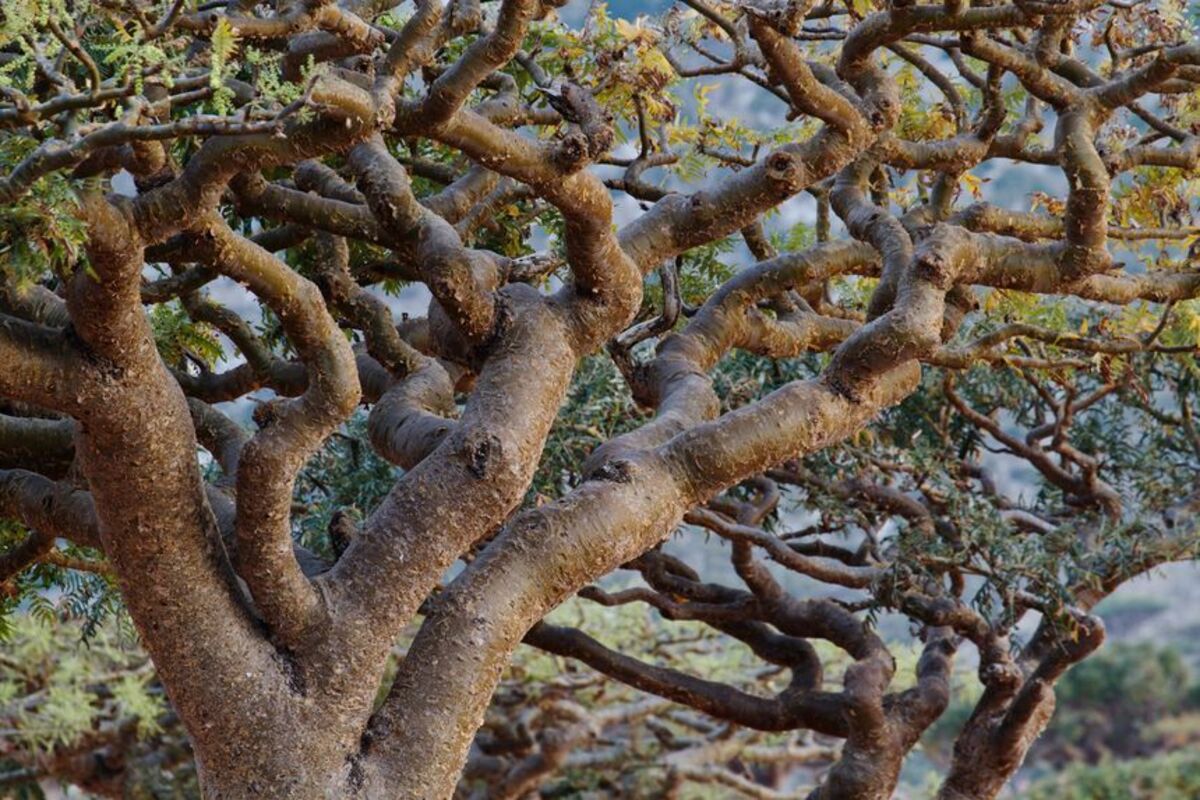
Not all frankincense is Boswellia sacra. In fact, there are roughly twenty Boswellia species scattered across the arid belts of Africa and Asia, and only a handful produce resin in commercial quantities.
The Four You'll Actually Encounter
Most of the frankincense in the world comes from four species. Each grows in a different place, expresses a different chemistry, and burns differently.
Boswellia sacra — Oman and Yemen
This is the one that built the Incense Road. It grows on limestone slopes in the Dhofar mountains, where the summer monsoon creates a microclimate unlike anywhere else on earth. The resin is pale, translucent, and carries notes of lemon, pine, and eucalyptus. When burned low and slow on an electric heater, it unfolds in layers — bright citrus upfront, then a cooling, almost minty middle, then a soft balsamic finish. This is the species behind Hojari, Najdi, and the other Omani grades. Our Royal Green Hojari is the finest expression of this species.
Boswellia carterii — Somalia and Ethiopia
For a long time, botanists thought this was the same species as sacra. Recent chiral GC-MS analysis proved otherwise. The chemistry is measurably different — lower alpha-pinene, higher limonene. The resin is more opaque, amber to orange-brown, and burns with a heavier, more resinous profile. It's what most people think of as "frankincense" because it's been the most widely exported species for centuries.
Boswellia serrata — India
Indian frankincense, also called salai guggul, grows in the dry deciduous forests of Madhya Pradesh and Andhra Pradesh. The resin is darker and softer than Omani sacra — more like sticky amber bits than glassy tears. Its aroma is warmer and spicier, with less of the piercing citrus top note that defines Arabian frankincense.
Boswellia papyrifera — Ethiopia and Eritrea
This species produces a resin known as Ethiopian frankincense. The tears are larger and more opaque, with a sweet, almost honeyed scent when burned. It's the species most commonly used in Ethiopian Orthodox Church rituals, where the smoke carries a different character entirely from the sharp, clean profile of Omani sacra.
The Rarer Species
Boswellia frereana (Somalia, known as yagar or Maydi frankincense) produces large, opaque, pale tears with a unique chemical profile — it's the only Boswellia species that contains no boswellic acids, making it chemically distinct from every other commercial frankincense. Boswellia rivae and Boswellia neglecta from the Horn of Africa are harvested in smaller quantities, each with their own aromatic signatures. You won't find them often outside specialist collections.
Why Species Matters
When you buy "frankincense" without checking the species, you're buying blind. The difference between Boswellia sacra and Boswellia serrata isn't academic — it determines how the resin behaves on charcoal, what temperature it melts at, what aromatic notes it releases, and in what sequence.
Our Reserve focuses on Boswellia sacra from Oman because that's the species with the deepest history on the Incense Roads and the most complex aromatic profile. The Royal Green Hojari we carry is the finest grade of that species — hand-sorted, translucent tears from trees that grow on the same Dhofar slopes the ancient traders protected with stories of winged snakes.
If you're just starting out, pick up a small sample of each species and burn them side by side. The contrast between Omani sacra and Indian serrata on the same charcoal disc is genuinely educational. It's one thing to read about terpene profiles. It's another to smell the difference. Browse our full collection of aromatic specimens to start exploring.