
What Is Black Sticky Frankincense? The Resin That Travelled the Incense Roads
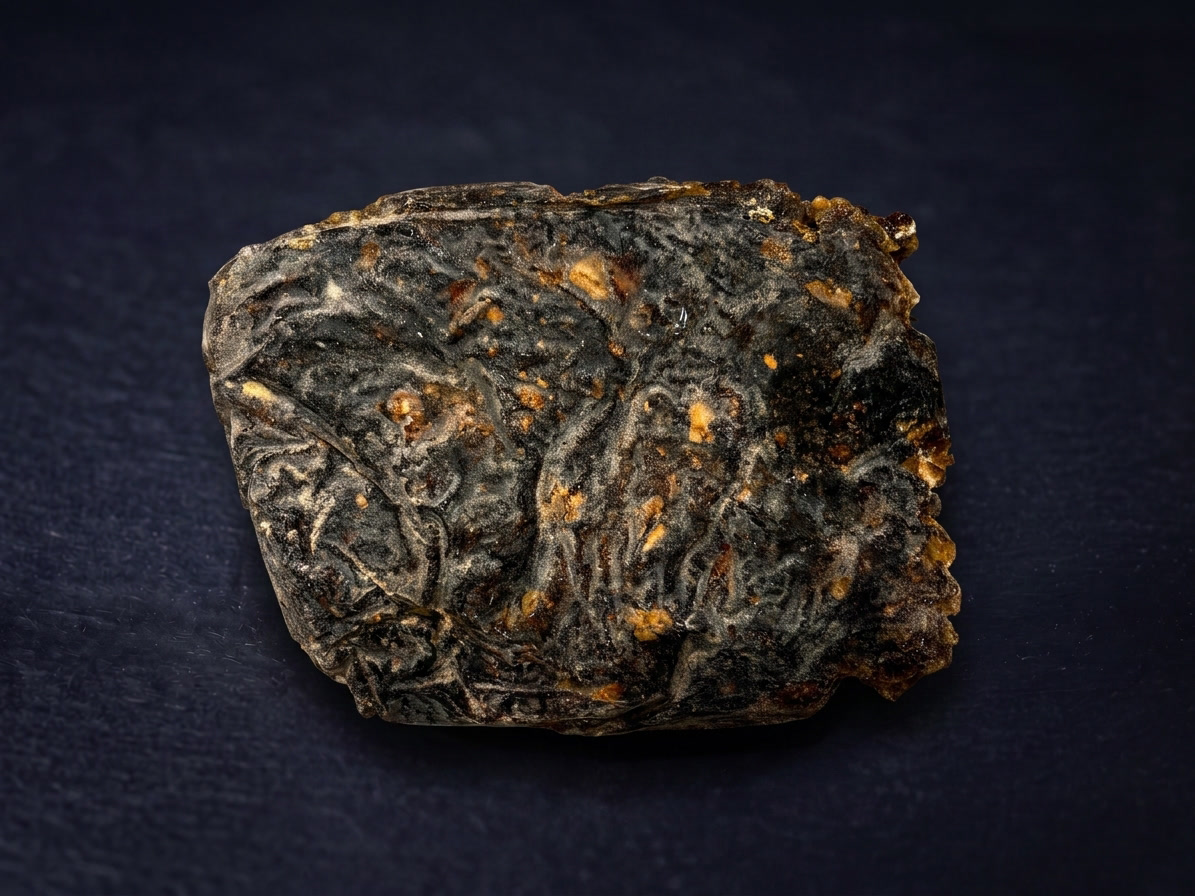
Black sticky frankincense is resin left on the tree to oxidise and cure into dark, honey-soft blocks, rather than harvested early as pale tears. It is the oldest form of frankincense ever traded — the version that crossed deserts on camelback for two thousand years — and it is made for slow, low-heat burning.
What Is Black Sticky Frankincense?
When a Boswellia sacra tree is tapped, a shallow incision in the bark weeps oleo-gum-resin. Gathered after a couple of weeks, that resin dries into the pale, glassy tears most people picture when they hear the word frankincense. Black sticky is what happens when the harvester simply waits. Left on the wound through the punishing heat of an Omani summer, the resin oxidises. Its colour darkens from pale amber to near-black, its texture stays pliant and resinous rather than glassy, and its heavier aromatic compounds concentrate into something dense, honeyed, and slow.
The result smells nothing like premium tear-grade resin. Where hojari is bright and piercing, black sticky is deep and dark — dark toffee, aged wood, warm balsamic smoke. It is the form Gulf households have compounded into bakhoor for generations, and the form that Omani harvesters have always kept back for their own burners.
How Does It Differ From Premium Hojari?
Royal Green Hojari is the opposite end of the harvest. It is sorted from the first, palest, most translucent tears of the season — resin with the highest volatile oil content, which is precisely what gives it that piercing profile of lime zest, eucalyptus, and cooling pine. On charcoal, those volatile oils flash off in minutes. Hojari behaves like a perfume: bright, immediate, and gone.
Black sticky behaves like a base note. Applied to gentle heat it does not ignite so much as melt — weeping slowly into the burner and releasing its deeper compounds over an evening rather than a few minutes. The two grades are not competitors. They are different instruments: one for the moment, one for the long hour.
"The palest, cleanest tears commanded the highest prices at Gaza and Alexandria. The dark, sticky resin went further — into temples, into medicine chests, into the bakhoor blends that still scent homes across Arabia."
How Do You Burn Black Sticky Frankincense?
With patience, and with gentle heat. On fierce charcoal the volatile oils burn off in seconds and the remaining sugars scorch into acrid smoke — the most common mistake made with this grade. Break off a piece the size of a pea and rest it at the cooler edge of the charcoal, or better still on an electric incense burner set low. It should melt and weep, never ignite.
This is also the traditional bakhoor resin. Macerated frankincense has been blended with sandalwood chips and oils in the Gulf for centuries precisely because its sticky, dense body binds a blend together and releases it slowly. If you have only ever burned pale tear-grade resin, black sticky is a genuinely different experience rather than a lesser one.
Our Reserve Black Sticky Sacra comes from coastal Oman in exactly this macerated form — and because it is not the hand-sorted grade, it costs around a third of Royal Green Hojari while filling a room for far longer.
The Resin That Built the Incense Roads
From the groves of Dhofar to the Mediterranean port of Gaza ran roughly two thousand kilometres of caravan trail, worked from the third century BC to the second century AD. The surviving desert cities of that route — Haluza, Mamshit, Avdat, Shivta — were inscribed by UNESCO in 2005 as the Incense Route: Desert Cities in the Negev. Pliny the Elder devoted much of Book XII of his Natural History to frankincense, cataloguing its grades, its adulterations, and the tests Roman buyers used to tell true resin from counterfeit. Strabo, writing a generation earlier, describes the caravans themselves and the tolls the Nabataeans levied at Petra.
It is no coincidence that the resin those caravans carried was dense, cured, and sticky. Pale tears are fragile things that crumble in a saddlebag; a macerated block shrugs off months of desert heat intact. The form that survived the journey became the form the ancient world knew — and the form we still sell today, unchanged.